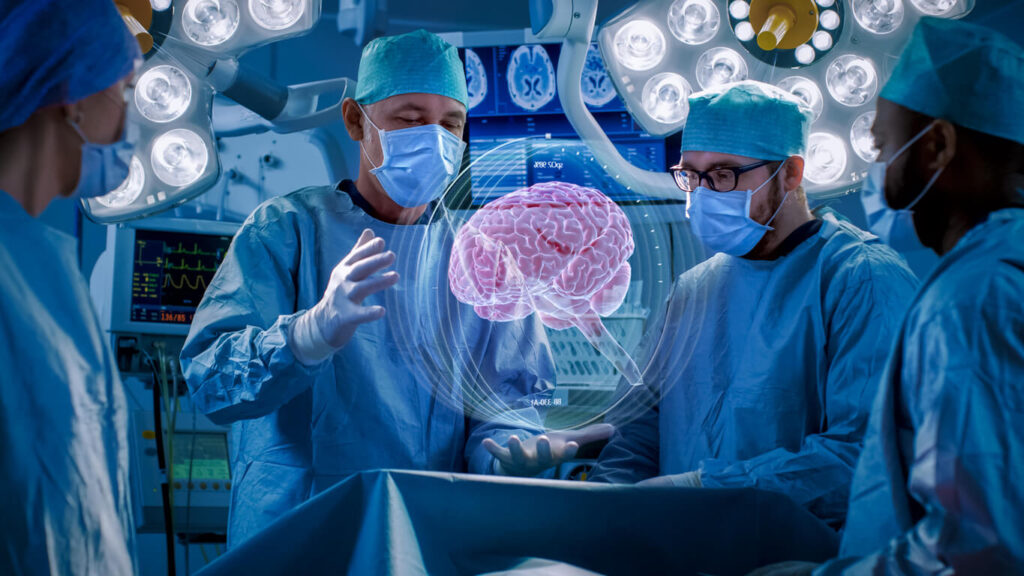

(Here is How Awesome Grace Hospital Delivers Optimal ICU Services and Rehabilitation Care)
Sepsis remains one of the most critical medical emergencies worldwide. Although it may begin as a simple infection, it can rapidly progress into a life-threatening condition marked by widespread inflammation, organ dysfunction, and, in severe cases, multi-organ failure. However, with advances in intensive care medicine and structured rehabilitation, outcomes for sepsis patients have significantly improved. Managing sepsis and multi-Organ Failure is now made possible with advances in Intensive Care Medicine.
At Awesome Grace Hospital (AGH), sepsis management goes beyond emergency response. Instead, it combines early detection, advanced ICU care, multidisciplinary collaboration, and structured rehabilitation, ensuring that patients not only survive but also recover with dignity and strength.
Understanding Sepsis and Multi-Organ Failure
Sepsis occurs when the body’s immune response to infection becomes dysregulated. As a result, inflammation spreads throughout the body, damaging blood vessels and impairing blood flow to vital organs. Consequently, organs such as the lungs, kidneys, brain, heart, and liver may begin to fail.
Furthermore, when two or more organs are affected simultaneously, the condition progresses to multi-organ failure, significantly increasing mortality risk. Therefore, early recognition and immediate intervention are essential.
Early Recognition: The First Line of Defense at AGH
First and foremost, early detection saves lives. At Awesome Grace Hospital, structured screening protocols are used in emergency rooms, wards, and outpatient settings to identify sepsis at its earliest stages.
In addition, trained clinicians closely monitor warning signs such as:
- Persistent fever or abnormally low body temperature
- Rapid breathing or heart rate
- Confusion or altered consciousness
- Low blood pressure
- Reduced urine output
As soon as sepsis is suspected, patients are rapidly escalated to the Intensive Care Unit (ICU), where definitive treatment begins without delay.
Evidence-Based Sepsis Bundles: Coordinated ICU Care
Once admitted into the ICU, AGH follows internationally recognized sepsis bundle protocols, ensuring timely, coordinated, and effective care.
These include:
- Immediate blood cultures and diagnostic testing
- Prompt administration of broad-spectrum antibiotics
- Aggressive but carefully monitored intravenous fluid resuscitation
- Continuous monitoring of vital signs and organ function
Meanwhile, when blood pressure remains low despite fluids, vasopressors are initiated to maintain adequate organ perfusion. As a result, tissue oxygenation improves and further organ damage is prevented.
Managing Sepsis and Multi-Organ Failure: Advances in Intensive Care Medicine
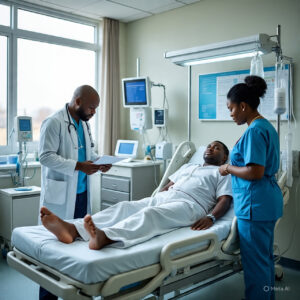
Advanced Organ Support in the AGH ICU
Respiratory Support
When sepsis affects the lungs, patients may develop respiratory failure or Acute Respiratory Distress Syndrome (ARDS). Therefore, AGH provides advanced oxygen therapy and mechanical ventilation using lung-protective strategies to minimize further injury.
Renal (Kidney) Support
Since sepsis commonly leads to acute kidney injury, AGH offers dialysis and renal replacement therapies within a controlled ICU environment. Consequently, toxins and excess fluids are safely removed while preserving hemodynamic stability.
https://www.uptodate.com/contents/acute-kidney-injury-in-sepsis
Cardiovascular Monitoring
Because sepsis can impair heart function, continuous cardiac monitoring and advanced hemodynamic assessments guide fluid therapy, vasopressor use, and medication adjustments. Thus, blood flow to vital organs is maintained at all times.
Precision Medicine and Infection Control
While antibiotics are essential, AGH emphasizes precision-based treatment. Initially, broad-spectrum antibiotics are started; however, once laboratory results identify the causative organism, therapy is promptly tailored.
In addition, biomarkers such as procalcitonin help guide treatment duration. As a result, antibiotic resistance is reduced, recovery is optimized, and complications are minimized.
Rehabilitation: Recovery Beyond the ICU
Importantly, survival is not the endpoint of care at Awesome Grace Hospital. Instead, rehabilitation begins early, often while the patient is still in the ICU.
AGH’s rehabilitation approach includes:
- Early physiotherapy to prevent muscle wasting
- Neurological assessment and cognitive recovery support
- Nutritional rehabilitation for strength restoration
- Psychological and emotional support for patients and families
As patients stabilize, they transition seamlessly into structured rehabilitation programs aimed at restoring mobility, independence, and quality of life.
Multidisciplinary Team Approach
At AGH, sepsis care is delivered by a multidisciplinary team comprising intensivists, neurologists, nephrologists, surgeons, nurses, physiotherapists, dietitians, and rehabilitation specialists. Consequently, care remains holistic, continuous, and patient-centered.
Managing sepsis and multi-organ failure is a practical possibility with advances in Intensive Care Medicine at AGH!
Frequently Asked Questions (FAQs)
1. Why is ICU admission critical for severe sepsis?
Because sepsis can cause sudden organ failure, ICU admission allows for continuous monitoring, rapid intervention, and advanced life-support technologies.
2. Can patients fully recover after sepsis?
Yes. With early ICU care and structured rehabilitation—such as those offered at AGH—many patients regain full function and return to normal life.
3. How soon should rehabilitation start after sepsis?
Rehabilitation should begin as early as possible. At AGH, it often starts in the ICU and continues after discharge for optimal recovery.
References (International & National)
- World Health Organization (WHO): Sepsis – Global Health Estimates
- Surviving Sepsis Campaign: International Guidelines for Management of Sepsis and Septic Shock
- Centers for Disease Control and Prevention (CDC): Sepsis Clinical Information
- Nigeria Centre for Disease Control (NCDC): Infection Prevention and Antimicrobial Stewardship Resources
- Intensive Care Medicine Journal & Critical Care Reviews
About Awesome Grace Hospital (AGH)
Awesome Grace Hospital (AGH) is a leading center for neurological care, intensive care medicine, dialysis, and rehabilitation, delivering compassionate, evidence-based healthcare with modern facilities.
Visit us at:
- 33 Ishaga Road, Surulere (Near LUTH), Lagos
- No. 6, Ogunlana Drive, Surulere, Lagos
We offer specialized and general care in:
- Neurosurgery (Brain & Spine)
- Stroke Unit
- Intensive Care Unit (ICU)
- Dialysis
- Orthopedic Services
- General Surgery
- Medical & Surgical Care
- Emergency & Ambulance Services
Contact Numbers:
08068542040 | 07017807030 | 08165648598 | 08103146408
Refer & Receive a 10% Rebate — Call Us Today!
Awesome Grace Hospital — We Care, God Heals.
Also read